


For supermarkets, convenience stores and beverage retailers, a commercial refrigerator has to do more than keep drinks cold.
It needs to make products easy to see, easy to organize and easy for customers to choose—while maintaining a suitable refrigerated environment throughout daily operation.
The LINKOOL LXG series commercial upright beverage display refrigerator is designed for this purpose.
With a vertical glass-door design, 2°C to 8°C operating temperature, fan cooling, R290 refrigerant, digital temperature control and adjustable shelving, the LXG series combines commercial refrigeration with customer-facing product display.
Available in multiple sizes from approximately 600L to 2060L, the series can be configured for different supermarket, convenience store and beverage-retail formats.
A beverage refrigerator in a retail store has two important functions:
The refrigeration system maintains a controlled refrigerated environment for beverages and other suitable chilled products.
The glass-door design allows customers to see the products without opening the cabinet.
This creates a simple retail process:
Cold Storage → Product Visibility → Product Selection → Purchase
Instead of placing beverages inside an enclosed storage refrigerator, retailers can turn the refrigeration cabinet into an active merchandising area.
This is particularly valuable for high-turnover products such as bottled drinks, soft drinks, water, juice, dairy beverages and ready-to-drink products.
The LXG series is designed for an operating temperature range of:
This range is suitable for many commercial chilled beverage applications.
Typical products may include:
However, product storage requirements vary.
Professional buyers should always confirm the required storage temperature of the actual products before selecting refrigeration equipment.
The correct selection process is:
Product requirement → Required temperature → Cabinet configuration → Refrigeration system
rather than selecting equipment based only on cabinet capacity.
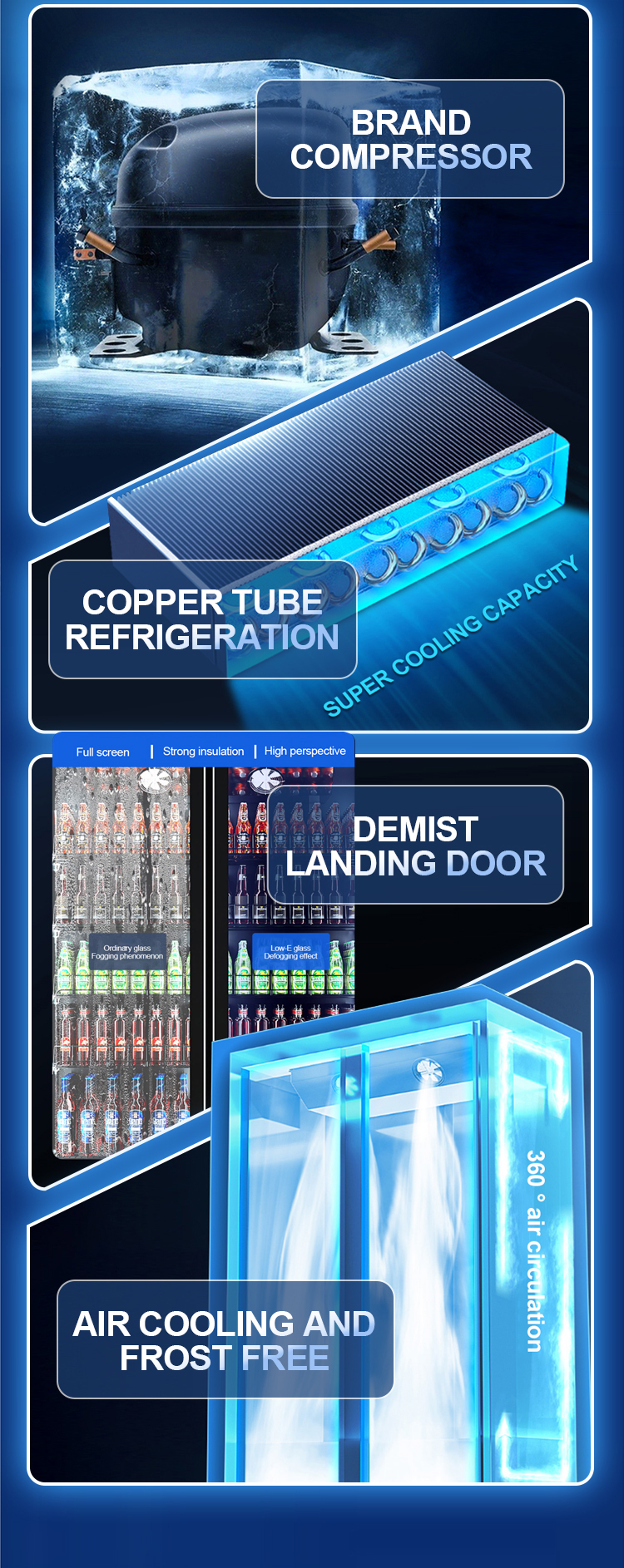
The LXG series uses a fan cooling system to circulate refrigerated air through the cabinet.
Forced-air circulation is particularly useful in commercial beverage display applications because the doors may be opened repeatedly throughout the day.
Customers open the doors.
Staff replenish products.
Products are removed and replaced.
Ambient air enters the cabinet.
The refrigeration system must therefore continuously manage the changing thermal load.
Fan-assisted air circulation helps distribute cooled air through the display area.
Actual temperature performance can vary depending on:
For best performance, products should not block the designed air circulation paths.
A commercial beverage refrigerator should not simply store drinks.
It should help sell them.
The LXG upright display refrigerator uses a glass-door design so customers can see products before opening the cabinet.
This is especially useful for:
Retailers can organize products according to:
Brand → Category → Package Size → Price → Promotion
The result is a more organized and customer-friendly beverage display.
Floor space is valuable in supermarkets and convenience stores.
A horizontal refrigerator can occupy a large area while providing relatively limited vertical product presentation.
An upright display refrigerator uses vertical space to create a tall refrigerated merchandising area.
This makes the LXG series suitable for:
For smaller stores, the narrow upright format can also make it easier to integrate refrigerated beverage display into existing retail layouts.
The published LXG series specification identifies R290 as the refrigerant.
R290, or propane refrigerant, is widely used in modern commercial refrigeration equipment because of its low global warming potential compared with many traditional high-GWP refrigerants.
However, refrigerant selection is only one part of overall refrigeration performance.
Actual energy consumption and operating cost depend on the complete system, including:
For this reason, commercial buyers should evaluate the complete refrigeration system rather than selecting equipment based only on refrigerant type.
Commercial refrigeration requires consistent monitoring and convenient temperature management.
The LXG series uses digital temperature control.
The controller allows operators to monitor the refrigerated cabinet and manage the configured operating temperature.
This is useful for:
For food and beverage retailers, temperature monitoring should be incorporated into the store's broader food-safety procedures.
Different beverages have different package sizes.
Bottled water may require a different shelf arrangement from:
Adjustable shelving allows retailers to reorganize the display according to product dimensions and merchandising requirements.
A practical shelf arrangement should provide:
Good product visibility + easy product access + sufficient air circulation
Retailers should avoid overloading shelves or blocking designed airflow paths.
A refrigerated cabinet is one of the few pieces of store equipment that can directly influence how customers interact with a product.
A well-organized beverage display allows customers to:
For high-turnover beverage categories, the refrigerator therefore becomes part of the store's merchandising strategy.
The LXG series can provide refrigerated beverage display for supermarket beverage aisles and chilled-food sections.
Typical applications include:
Convenience stores often operate long hours and experience frequent customer access.
The upright glass-door format provides organized refrigerated display while keeping products visible.
For beverage-focused retailers, the refrigerator can be organized by brand, product category, package size or promotional strategy.
Customers often make quick purchasing decisions in petrol station convenience stores.
A clear glass-door beverage refrigerator can make cold drinks easier to identify and access.
The LXG series can also be used for chilled beverage storage in cafés, restaurants and foodservice environments where customer-facing display is required.
Glass-door display allows staff to quickly identify beverages while maintaining a clean and organized presentation.
High customer traffic creates a different refrigeration load from a low-traffic store.
For stores with frequent door opening, operators should pay attention to:
Avoid keeping the door open unnecessarily.
Load products according to the designed shelf capacity.
Do not block air circulation openings.
Avoid loading large quantities of warm products at once if this exceeds the equipment's intended operating conditions.
Keep the refrigeration system clean according to the manufacturer's maintenance instructions.
These operating practices help the refrigerator perform more consistently over its service life.
For B2B customers, product specifications should be supported by defined testing procedures whenever possible.
Recommended testing includes:
Measure temperatures at multiple locations inside the cabinet to evaluate temperature distribution.
Simulate frequent customer access and observe temperature recovery.
Evaluate cabinet performance under representative product loading conditions.
Test refrigeration performance under elevated ambient conditions relevant to the destination market.
Verify defrost operation and inspect the refrigeration system for abnormal frost accumulation.
Measure electricity consumption under clearly defined ambient, loading and temperature conditions.
A useful commercial refrigeration test report should include:
Test Conditions + Test Method + Test Duration + Measurement Equipment + Results
This provides B2B buyers with more meaningful technical information than unsupported statements such as "high efficiency" or "energy saving."
A refrigerator installed in Germany may operate under very different conditions from one installed in Saudi Arabia, the UAE, Southeast Asia or South America.
Factors that should be considered include:
LINKOOL's own beverage refrigeration guidance emphasizes that climate, store format, door-opening frequency, floor space and product turnover can all influence the selection of commercial beverage refrigeration equipment.
For B2B projects, buyers should provide the destination country and expected operating environment before finalizing the refrigeration configuration.
For importers, distributors and supermarket groups, selecting a commercial refrigerator is not simply about finding the lowest unit price.
Professional buyers should evaluate:
A complete supplier evaluation gives buyers a better basis for long-term procurement decisions than comparing price alone.
Retail chains and distributors may require refrigeration equipment that matches their own brand identity or store layout.
Depending on the model and project requirements, OEM/ODM discussions can include:
Final specifications should be confirmed according to the selected model, destination market and order requirements.
Commercial refrigeration reliability starts during manufacturing.
A professional production process should control quality throughout the manufacturing cycle:
Raw Material Inspection
↓
Sheet Metal Cutting
↓
Bending & Forming
↓
Cabinet Assembly
↓
Foaming & Insulation
↓
Refrigeration System Assembly
↓
Electrical Assembly
↓
Temperature Testing
↓
Final Inspection
↓
Packaging
↓
Shipment
For B2B buyers, evidence of actual manufacturing and testing processes can provide stronger supplier confidence than generic statements such as "best quality" or "professional factory."
LINKOOL's website identifies the company as a commercial refrigeration manufacturer and lists certifications and manufacturing information on its product pages.
Before ordering a commercial beverage display refrigerator, consider these questions.
Beverages, dairy products and other chilled foods may have different storage requirements.
The LXG series is specified at:
Choose from approximately:
600L / 1000L / 1530L / 2060L
according to your store requirements.
Measure the installation area before selecting the cabinet size.
High-traffic stores should pay particular attention to door-opening frequency and temperature recovery.
Ambient temperature and humidity can affect refrigeration performance.
Certification requirements vary between countries and markets.
Confirm logo, cabinet color, packaging and other customization requirements before production.




The upright display fridge.efficient and stylish,enhances supermarkets.convenience stores,and bars.It keeps perishables fresh in supermarkets.organizes beverages in convenience
stores,and attracts patrons in bars,boosting sales and customer satisfaction.
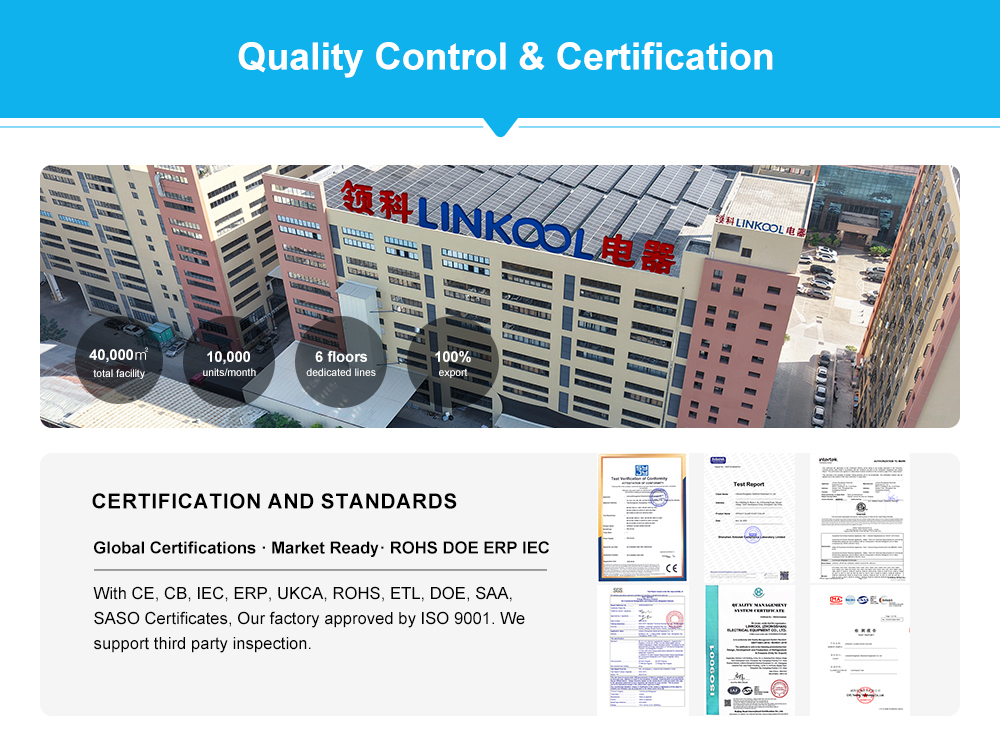
Linkool is an internationally operating manufacturer of commercial refrigeration company, Lincool(Zhongshan) Electrical equipment
leading innovator of temperature-controlled food display cases for supermarket and foodservice operators, produce all range of
plug-in&am


