


For beverage retailers, keeping drinks cold is only part of the job.
Customers also need to see the products clearly, compare different brands and flavors, and quickly find the drink they want. A refrigerator with poor visibility or an inefficient layout can make valuable retail space less productive.
The LINKOOL commercial glass door display refrigerator is designed to combine reliable beverage refrigeration with high-visibility product merchandising.
With its glass-door display concept, the refrigerator is suitable for bottled drinks, soft drinks, beer and other packaged beverages. It can be used in supermarkets, convenience stores, bars, cafés, restaurants, beverage shops and other commercial environments.
Instead of simply storing drinks, it helps turn refrigerated space into a customer-facing beverage display.
Traditional solid-door refrigerators hide products from customers.
For retailers, this can create several problems:
A glass door beverage cooler addresses these challenges by allowing customers to see the products before opening the cabinet.
This makes the refrigerator suitable for businesses that want to combine:
Cold Storage + Product Visibility + Organized Merchandising
Beverages are highly visual products.
Brand recognition, packaging, color and product presentation can all influence purchasing decisions.
The transparent glass door creates a direct visual connection between the customer and the products inside.
Retailers can organize beverages according to:
This makes the unit particularly suitable as a commercial beverage display refrigerator for high-traffic retail environments.
Customers can quickly identify their preferred products without opening multiple doors.
Different retail businesses sell different types of beverages.
The LINKOOL display refrigerator can be used for a wide range of packaged chilled products, including:
Create a dedicated beer display that makes different brands and package sizes easy to identify.
Display carbonated drinks, flavored beverages and other packaged refreshments in an organized format.
Provide customers with clear visibility of bottled water and other everyday drinks.
Create an eye-catching display for impulse-purchase beverage categories.
Use the refrigerator for suitable packaged chilled beverages according to their required storage temperature.
For distributors and retailers, this flexibility makes the unit suitable for different beverage merchandising strategies.
Retail floor space comes at a premium.
A horizontal freezer or refrigerator may provide considerable storage, but it can also occupy a large footprint.
The upright display format makes better use of vertical space, allowing businesses to display more beverage products within a relatively compact floor area.
This is particularly valuable for:
Instead of expanding the refrigeration footprint, retailers can make better use of available vertical space.
A beverage display needs to remain visible throughout the business day.
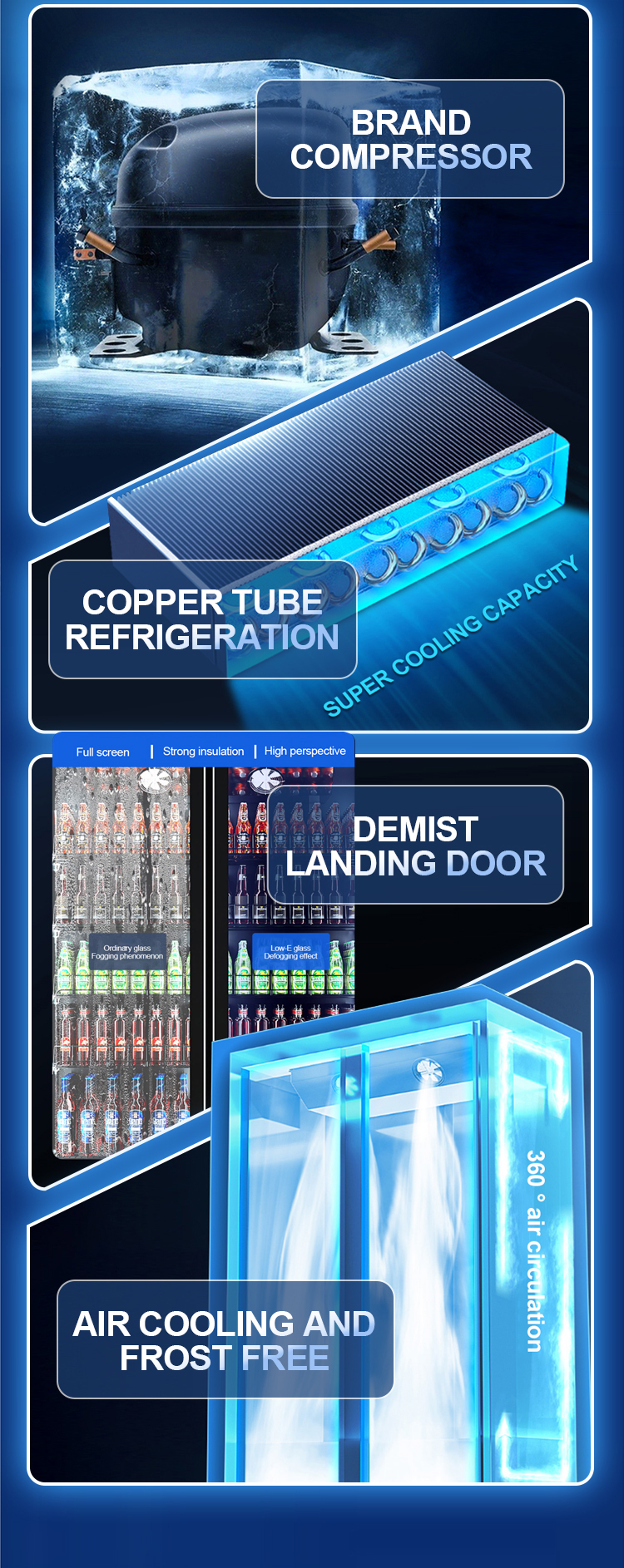
Internal LED lighting can help illuminate the shelves and product packaging, making beverage brands easier to identify.
Better internal illumination can help retailers:
For stores operating into the evening, an illuminated beverage refrigerator can also become a visible part of the overall store environment.
A beverage refrigerator may need to accommodate different bottles, cans and package sizes.
Fixed shelves can make this difficult.
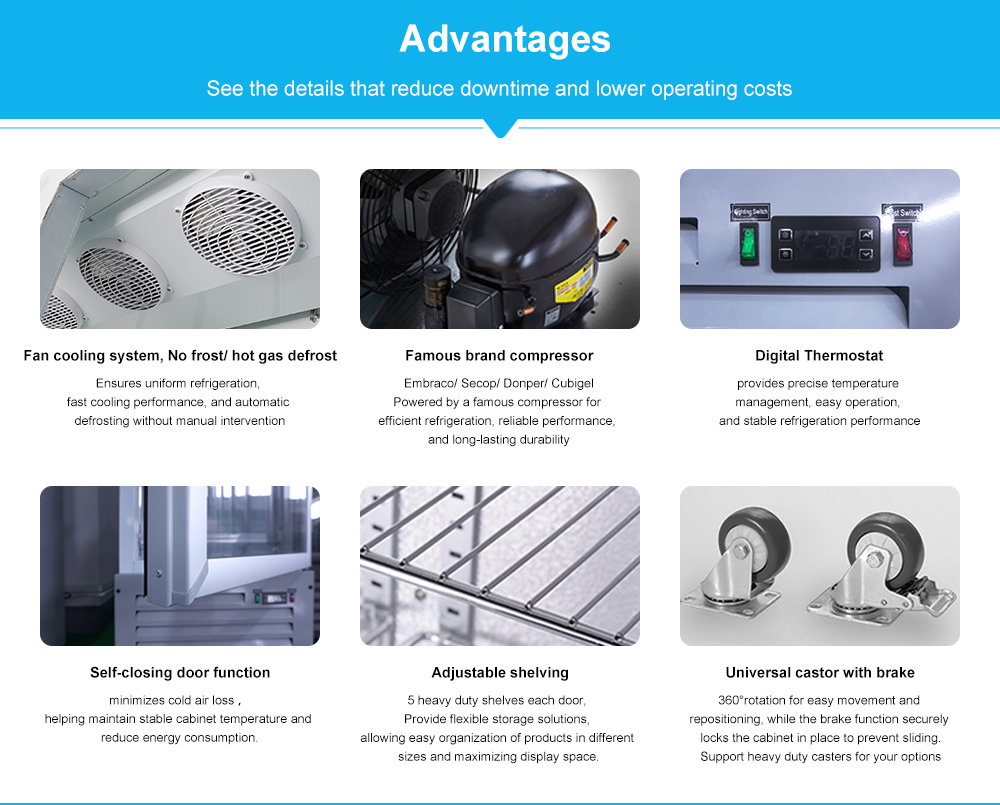
Adjustable shelving allows operators to modify the internal layout according to the products being sold.
For example:
Upper shelves: cans and smaller beverage packages
Middle shelves: best-selling beverages
Lower shelves: larger bottles and heavier products
This helps retailers maintain an organized display while making it easier to adjust the cabinet for seasonal products and promotional campaigns.
Supermarkets need to display large beverage selections while maintaining an organized shopping environment.
A glass door beverage display refrigerator allows customers to browse different drinks quickly and can be positioned within dedicated beverage aisles or high-traffic areas.
Convenience stores often have limited floor space and high customer turnover.
The upright configuration makes efficient use of vertical space, while the transparent doors allow customers to identify cold drinks quickly.
This makes it suitable for grab-and-go beverage sales.
Gas stations often depend on quick beverage purchases.
A commercial drink cooler positioned near the checkout or customer flow area can display beer, soft drinks, bottled water and energy drinks where customers can easily see them.
Bars and cafés need fast access to frequently ordered beverages.
A glass door refrigerator allows staff to identify products quickly while also providing a professional front-of-house or back-bar display.
Restaurants can use the refrigerator for bottled beverages, soft drinks, beer and other chilled products.
The vertical design helps keep beverage inventory organized without occupying excessive kitchen or service-area space.
For B2B buyers, the product itself is only one part of the purchasing decision.
Importers and distributors also need to consider:
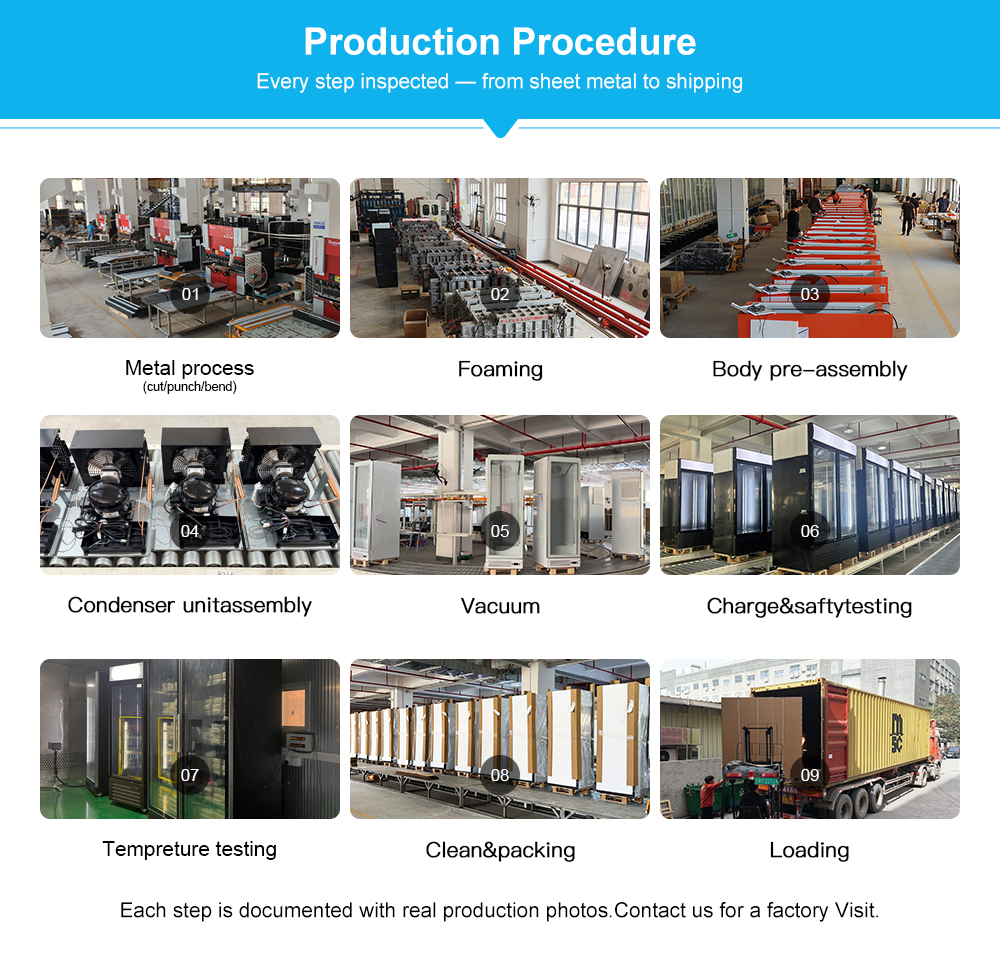
LINKOOL focuses on commercial refrigeration manufacturing and supplies refrigeration equipment for international markets.
With an approximately 45,000㎡ manufacturing base, 400+ employees and production capacity of up to 10,000 units per month, LINKOOL can support both standard commercial refrigeration orders and larger B2B projects.
The company also has experience serving customers in 60+ countries, providing a foundation for international refrigeration projects.
Different beverage brands, distributors and retailers may require different product configurations.
LINKOOL can support customized commercial refrigeration projects according to project requirements, including:
This allows distributors and beverage brands to develop refrigeration equipment that fits their own market positioning.
For larger projects, the technical configuration should be confirmed according to the selected model and destination market.




The upright display fridge.efficient and stylish,enhances supermarkets.convenience stores,and bars.It keeps perishables fresh in supermarkets.organizes beverages in convenience
stores,and attracts patrons in bars,boosting sales and customer satisfaction.
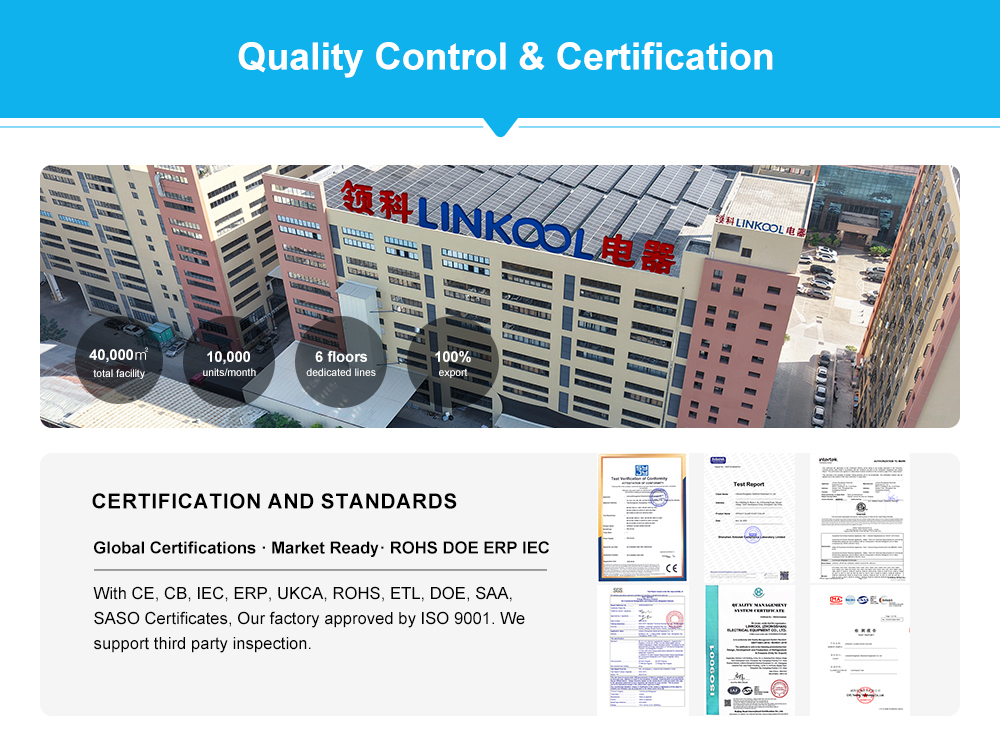
Linkool is an internationally operating manufacturer of commercial refrigeration company, Lincool(Zhongshan) Electrical equipment
leading innovator of temperature-controlled food display cases for supermarket and foodservice operators, produce all range of
plug-in&Remote Multiple doors display chiller&display freezer,Open air chiller,Combine Island freezer,Server counter etc.
Total 35000m2 and 20000+m2 workshops designed capacity of 120000 units per year,In 2014,our company rated as "China
famous brand"by the Federation,In 2018 Company approved by SGS&Obtain IS09001,IS014000 Certificate. most of our products
got CE,CB,GEMS,MEPS,SABER,ETL,NSF7,DOE etc certificate.

A commercial glass door beverage refrigerator is a refrigeration unit designed to store and display chilled beverages at the same time. The transparent doors allow customers to view products without opening the cabinet.
It can be used for suitable packaged chilled beverages such as beer, soft drinks, bottled water, energy drinks, juice and other refrigerated drinks, provided their required storage temperature matches the refrigerator's specification.
The glass door improves product visibility and allows customers to see brands, flavors and package sizes before opening the refrigerator. This makes it particularly useful for retail beverage merchandising.
Yes. The upright glass-door format is suitable for supermarkets, convenience stores, grocery stores and other retail environments requiring visible beverage storage.
Yes. A glass-door beverage refrigerator can be used to display packaged beer and other chilled beverages, subject to the required storage temperature.
Yes. Its vertical design helps maximize available floor space, while the glass doors allow customers to quickly identify cold beverages.
Yes. LINKOOL can discuss OEM/ODM requirements such as branding, cabinet configuration, electrical specifications, refrigeration components and packaging according to the project.
Consider available floor space, beverage volume, product type, customer traffic and required storage temperature. These factors help determine the appropriate cabinet size and configuration.
